
The moisture problem on a gym roof comes from inside the building
Most commercial roofs in Fort Myers fight water coming down. A fitness center fights water coming up. Shower rooms, steam rooms, hot tubs, and any indoor pool pump warm, saturated air against the underside of the deck all day, and in our humid Gulf Coast climate that interior vapor will condense inside the roof assembly no matter how watertight the membrane is on top. If the vapor retarder is in the wrong position for our climate zone, that condensation soaks the insulation, the R-value collapses, and the owner is chasing phantom leaks that no surface patch will ever fix. We scope a gym roof around vapor drive from the start, because that is the failure mode that actually takes these roofs down.
The demand for this work is steady across the metro. National clubs line the Colonial Boulevard and Cleveland Avenue retail belts, big-box fitness anchors sit in the shopping centers off Six Mile Cypress Parkway and Gulf Coast Town Center near the I- interchange, and Gateway and Cape Coral keep adding studios and full-service clubs as the rooftops fill in. They range from single-tenant boxes to anchor spaces in larger centers, but they share the same interior-humidity and high-occupancy load that makes the roof a specialty rather than a commodity.
Big open spans and a crowded roof
A gym is mostly column-free volume — a weight floor, a basketball court, a group-fitness studio that has to clear-span so members aren't dodging posts. Those wide unsupported bays drive the deck and fastening design, especially under the wind-uplift loads coastal Florida code demands. Above that open floor sits one of the densest rooftop mechanical layouts in commercial construction. High occupancy means high air volume, so a fitness center carries far more rooftop units, exhaust fans, and make-up air than a retail or office building of the same footprint, and each one is a curb and a flashing detail. Generic patterns don't hold up in this humidity; every penetration gets detailed for the conditions the building actually creates.
Why the HVAC density drives the warranty
The curb count is where gym roofs quietly fail warranty inspections. Older fitness buildings around Fort Myers are full of undersized curbs that don't meet the membrane manufacturer's minimum flashing height, and on a humid roof that's a leak waiting to happen. We document every curb, size, and clearance before pricing the job and raise or rebuild the short ones as part of the scope, so the finished assembly actually qualifies for the warranty instead of voiding it on a technicality at the first inspection.
Membrane choices for a humid, high-traffic roof
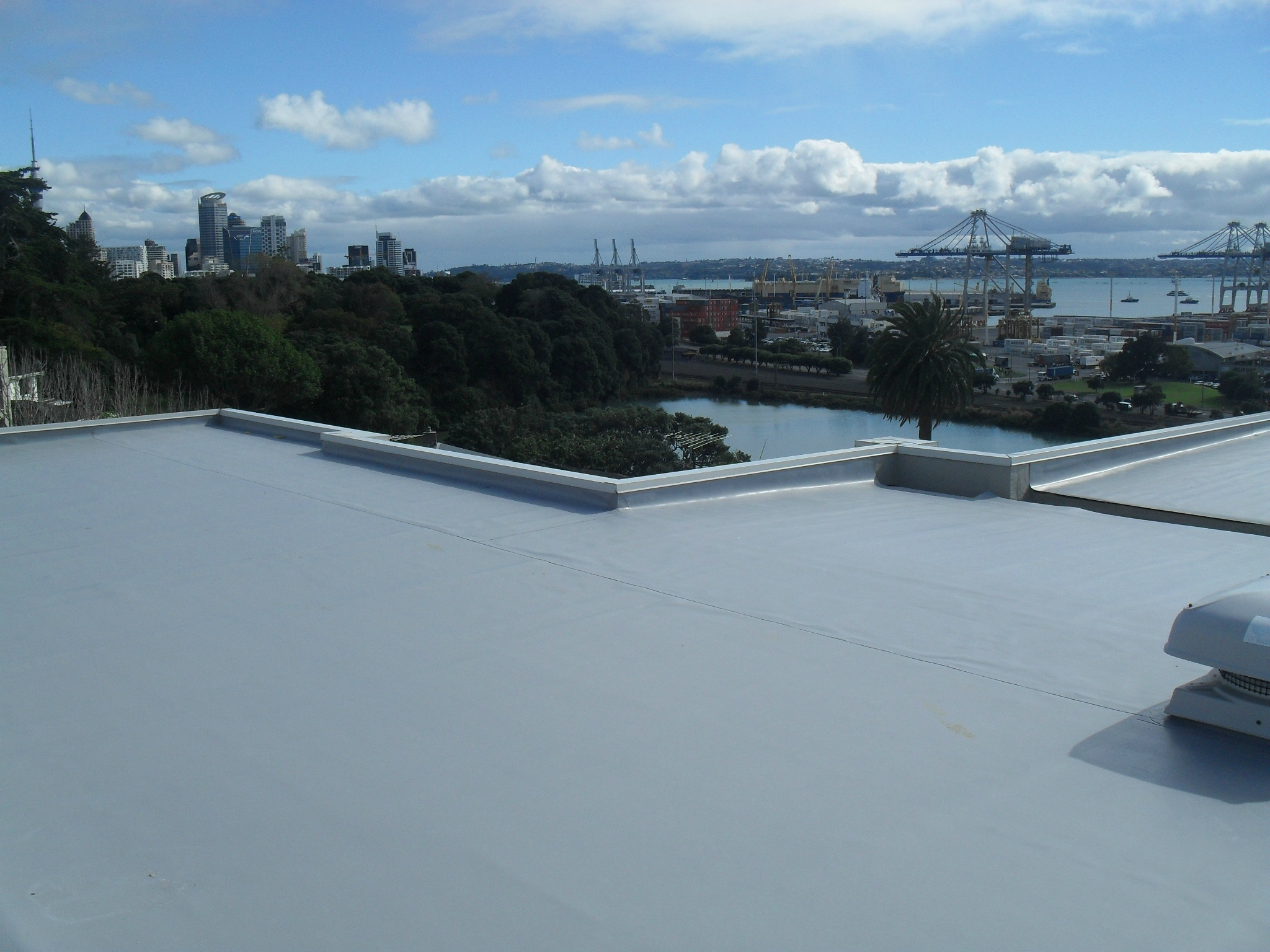
For clubs with pools, steam, or heavy locker-room loads we lean toward a fully adhered 60-mil TPO or PVC system. An adhered membrane eliminates the fastener-penetration field a mechanically attached roof punches through the deck and creates a more vapor-resistant assembly overhead, which matters when the air below is constantly saturated. For dry-floor gyms without a natatorium, a mechanically attached 60-mil TPO is appropriate and more economical, paired with a vapor retarder positioned for our climate. Reflective white TPO also earns its keep on a Fort Myers gym, where summer rooftop temperatures bake the membrane and the cooling load runs hard for a crowded floor; a reflective surface eases both the thermal cycling on the roof and the demand on the rooftop units sitting in full Gulf Coast sun.
Skylights and daylight openings add risk
Many newer clubs around the Six Mile Cypress and Gulf Coast Town Center corridors lean into open, daylit floors with skylights and translucent panels over the training space. Every one of those openings is a curb and a flashing detail in the middle of the field, and on a humid roof a skylight curb that wasn't built to membrane height is a reliable leak. We assess each opening's curb, flashing, and condensation path during the survey and bring the short or deteriorated ones up to spec as part of the reroof rather than working around them.
Working around a building that never closes
Fitness centers in Fort Myers run from before dawn to past midnight, and many never lock the doors at all. There is no overnight maintenance window to hide a reroof in, so we build the schedule around member traffic, pool-chemical deliveries, and the HVAC maintenance windows that keep indoor air within Florida's health-department standards for commercial pools. The gym manager gets a daily status report confirming watertight dry-in before the next operating cycle, and crew start times and noise limits near occupied locker rooms are set in writing before we mobilize.
Chain process or independent owner, same closeout
Whether the location runs through a national chain's corporate facilities and approved-vendor process or belongs to an independent operator or a commercial real-estate investor, the closeout file is identical: permit and final inspection, manufacturer warranty registered to the owner, a roof-zone diagram with the full penetration inventory, the drain and flashing inspection record, and dated photos of every detail. Chain accounts get it formatted to drop straight into their asset-management system.
Fitness Center & Gym Roofing Questions
Why does interior humidity matter so much on a gym roof?
Pools, showers, steam rooms, and dense occupancy push warm, saturated air against the underside of the deck. In Fort Myers's humid climate that vapor condenses inside the roof assembly if the vapor retarder is positioned wrong, soaking the insulation and destroying its R-value. We review the existing assembly and specify the correct vapor control for our climate zone so the reroof doesn't trap moisture.
What membrane do you recommend for a club with a pool?
A fully adhered 60-mil TPO or PVC system, because adhering the membrane eliminates the fastener-penetration field of a mechanically attached roof and creates a more vapor-resistant assembly over a constantly humid interior. Dry-floor gyms without a pool can use a more economical mechanically attached 60-mil TPO over a properly positioned vapor retarder.
How do you reroof a gym that's open 24 hours?
We schedule around member traffic, pool-chemical deliveries, and HVAC maintenance windows, confirm dry-in daily in writing, and give the manager a status report before each operating cycle. Crew start times and noise limits near occupied locker rooms are documented in the pre-construction plan.
Is the rooftop HVAC curb work included?
Yes. We document every curb, size, and clearance before pricing, and undersized curbs — common on older gym buildings — are raised or rebuilt as part of the scope so the new membrane meets the manufacturer's flashing-height requirements for warranty.
What do you hand over at closeout?
Permit and final inspection certificate, manufacturer warranty registration, a roof-zone diagram with penetration inventory, the drain and flashing inspection record, and photo documentation of completed details. Chain operators receive it formatted for their corporate facility-management system.