A leak here is a food-safety event, not a maintenance ticket
The moment water gets past the deck above an active production line, the problem stops being a roof problem. It becomes a quality-assurance call, a possible product hold, and a paper trail for a regulator. Food processing roofing in Fort Myers has to be planned to prevent that outcome, not clean it up afterward. We build our scopes around the line below the deck: where the food-contact zones are, where the refrigeration sits, and where a single open seam during an afternoon downpour could contaminate a run.
Lee County's food and beverage operations have grown alongside the region's distribution role. Commissaries, produce packers and cold-pack houses, bakeries, beverage and bottling lines, and specialty processors cluster where industrial space meets highway access, in the Tri-County , around the Lee County Industrial Park off Old US 41, and along the Alico Road and Metro Parkway corridors that feed the airport and the I-75 freight lanes. These plants run hard, and their roofs carry loads and humidity that a retail roofer rarely sees.
Not every material is allowed over the line
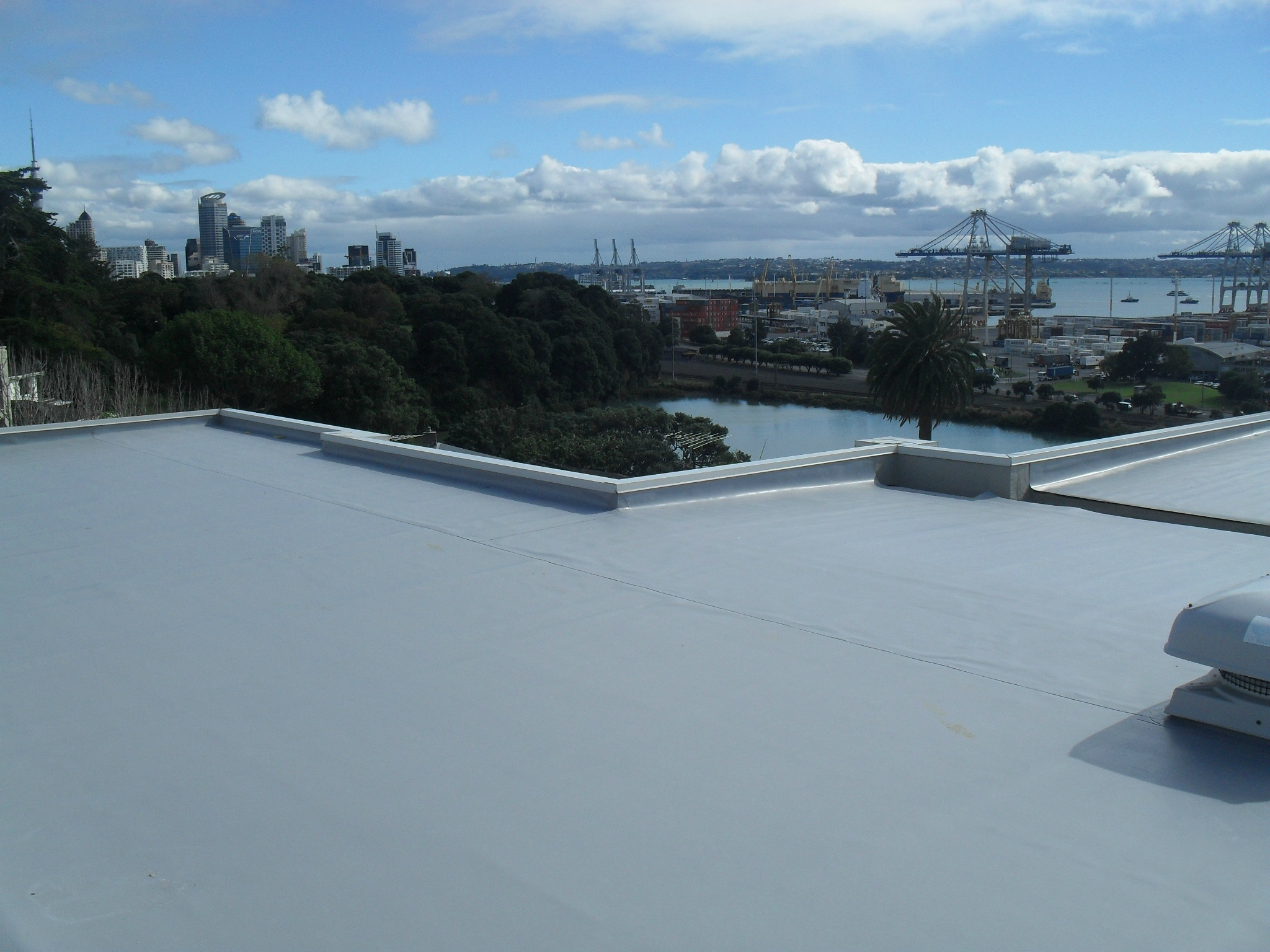
The membrane conversation for a USDA- or FDA-regulated plant starts with the acceptability list, not with a price. Not all commercial membranes are cleared for use above a food-contact area. White TPO and PVC single-plies are generally acceptable over enclosed processing space, but the exact product formulation and installation method has to be confirmed against your facility's food-safety plan. The same scrutiny applies to the adhesives, primers, and sealants in the flashing details: many standard roofing adhesives are solvent-based and simply aren't welcome in a food environment. We sort that out with your QA team before anything is specified.
Washdown humidity and the deck you can't see corroding
Wet processing means high-pressure washdown, and washdown means a building that is humid from the floor up for much of every shift. That interior moisture is constantly trying to migrate into the roof assembly. Combine it with the heat and humidity of the Southwest Florida climate and you have vapor drive working against you from two directions. We design the assembly, the vapor retarder, and the insulation to manage that drive, because the failure mode is invisible from the roof: condensation forming inside the assembly that corrodes the steel deck and degrades the insulation without ever showing a stain on the ceiling until it is far too late.
Refrigeration loads and cold-chain continuity
Freezer rooms, chill rooms, and blast-freeze areas add weight and a thermal challenge. The roof assembly over refrigerated space has to hold the cold chain's thermal continuity or it will sweat inside itself. Tapered insulation over those areas gets designed around the actual operating temperatures and the local vapor-drive direction, and the rooftop refrigeration equipment adds concentrated structural loads that the membrane and curbs have to accommodate. We verify deck capacity before we add insulation thickness and we route drainage so water never ponds over a freezer and dumps extra thermal load onto the system.
Sanitation and pest control reach the roof, too. Many food plants want smooth, easily inspected membrane surfaces, sealed terminations, and bird-deterrent details that deny nesting on equipment curbs and parapets, because birds and the debris they bring are an audit finding waiting to happen. We detail penetrations and edge conditions to leave no open gaps or harborage points, and we keep drains and scuppers screened and clear so standing water never becomes a breeding source on the roof of a food building. These are small details on paper that carry real weight when an inspector is walking the roof with your QA manager.
The sanitation window runs the schedule
- We phase around production, not the reverse. Many plants here run two or three shifts with a single weekly sanitation window. Envelope work over an active line is confined to that window, with QA confirming the floor is clean and protected first.
- Emergency response is built in. A leak over a running line gets immediate temporary dry-in and documentation support for your incident reporting, with 24-hour contact provided at closeout.
- Inspection-ready records. Roof condition is a standard item in USDA and FDA inspections, so we leave you condition documentation and repair records your QA manager can produce on demand.
After Hurricane Ian, every operator on this coast understands what a roof failure can cost a perishable inventory. We document edge metal and attachment to current wind requirements while we are up there, so the system that keeps your line dry day to day also holds through the next storm.
Food Processing Facility Roofing Questions
Are all roofing materials allowed above food production areas?
No. USDA- and FDA-regulated facilities require membranes, adhesives, primers, and sealants to be confirmed acceptable for food environments before installation, and that varies by product. We identify your regulatory framework and confirm material acceptability with your QA team before specifying anything above a food-contact zone.
How do you schedule work in a plant that runs continuously?
We work with your facilities manager to find the weekly sanitation window and any planned shutdowns where envelope work over the line can proceed. Work above refrigerated areas is coordinated with the refrigeration team so any equipment work doesn't break cold-chain continuity.
How do you keep moisture out of the assembly with all the washdown humidity?
We design the vapor retarder and insulation specifically for a high-humidity interior and the local vapor-drive direction. The risk is condensation forming inside the assembly and corroding the deck with no visible leak, so the detailing is built to stop that, not just to shed rain.
How do you handle drainage over freezer and chill rooms?
Ponding over a refrigerated room adds thermal load and accelerates deck corrosion, so we use tapered insulation to drive water to perimeter scuppers or interior drains and confirm the design matches the refrigeration system's thermal specs.
What happens if the roof leaks during production?
A leak over a running line means immediate contact with your QA and facilities team for product-hold evaluation, plus priority mobilization for temporary dry-in and documentation support for your incident reporting. We provide 24-hour emergency contact at closeout.