Fort Myers has grown into one of Southwest Florida's busiest dining markets, with restaurant corridors stretching from the historic River District downtown through the Cape Coral bridge approaches, out to the Gulf Coast Town Center development, and into the dense commercial strips along Colonial Boulevard and U.S. 41. The region's high proportion of seasonal residents and winter visitors means restaurant kitchens run near capacity for an extended season, then maintain steady local business through the summer. That consistent operational tempo, combined with a climate that delivers some of the nation's most intense tropical weather, makes commercial roofing for Fort Myers food service buildings a specialized discipline.
Hurricane Ian's 2022 landfall near Fort Myers made the region's wind and water exposure viscerally clear to restaurant owners who had treated roofing as a low-priority maintenance item. Post-Ian, the Lee County permitting and inspection process has become stricter in practice, and restaurant operators who had deferred re-roofing decisions before the storm faced longer, more expensive remediation projects afterward. The lesson extends beyond storm prep: a roof that isn't performing under Florida Building Code wind uplift standards isn't just a maintenance risk—it's a code compliance exposure. Florida Product Approval requirements for membranes, curbs, and flashings apply to every re-roofing project in Lee County regardless of building size.
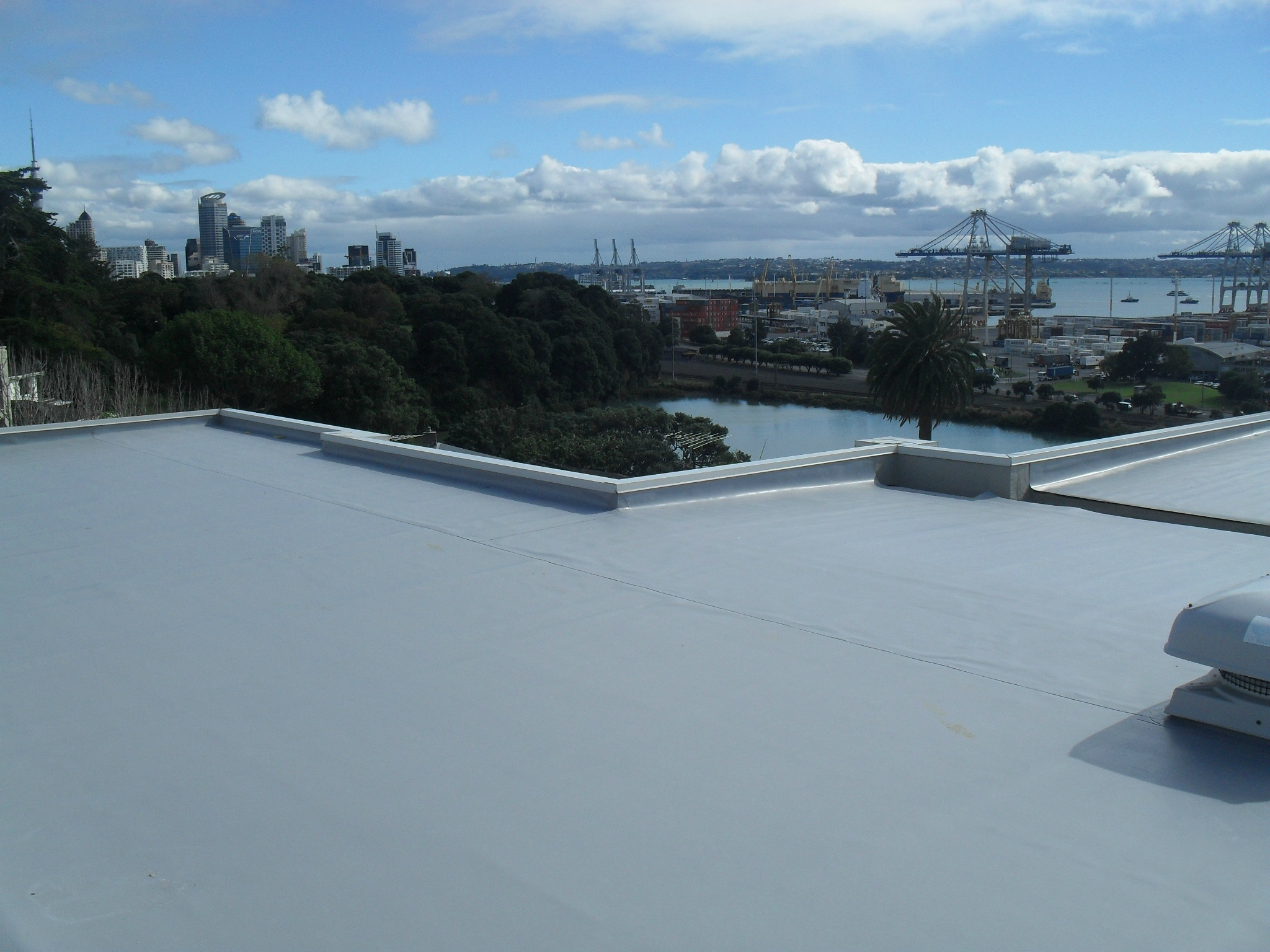
Grease exhaust flashing is a particular pressure point in Fort Myers restaurant buildings. The kitchens serving the River District seafood houses and the national chains along Colonial Boulevard run continuously during tourist season, pushing exhaust through rooftop curbs in conditions where Southwest Florida's humidity keeps the moisture content of that exhaust high. Grease-and-moisture combination at the flashing interface is aggressive—it infiltrates any lap separation in single-ply membranes and degrades adhesives in the curb base flashing faster than either grease or moisture alone would. The industry standard for Fort Myers restaurant roofs is PVC or TPO with fully heat-welded seams at every exhaust penetration, inspected annually and cleaned to prevent grease buildup from creating drainage blockages.
The walk-in cooler roofing detail is consistently underspecified in Fort Myers restaurant buildings, particularly in the commercial strip developments along U.S. 41 that were built during the rapid growth periods of the 1990s and early 2000s. Those buildings often have aging roof assemblies where vapor barriers were either absent or positioned incorrectly relative to the cooler enclosure, creating conditions where moisture has been accumulating in insulation for years. In Fort Myers's climate, that moisture doesn't just compress insulation R-value—it creates conditions where biological growth develops inside the roof assembly, contributing to indoor air quality problems that eventually become health code concerns.
Fort Myers's QSR concentration is substantial, with major franchise clusters near the Gulf Coast Town Center and along Summerlin Road and Daniels Parkway. Franchise remodel cycles—driven by brand prototype updates and drive-through technology upgrades—regularly require new rooftop penetrations and HVAC equipment mounts. Lee County requires permits for these additions, and the permitting process includes inspection of the roofing work as part of the mechanical installation approval. Contractors working on QSR remodels in Fort Myers who don't have Florida roofing license continuity can create permit exposure for the franchise owner, which complicates both the current project and future work on the same building.
Southwest Florida's rainy season runs from June through September, delivering afternoon thunderstorms that are among the most intense in the country for precipitation rate. Restaurant roofs with partially blocked drains—from the combination of tropical debris, grease residue, and the accumulated detritus of a tourist-season operating cycle—can collect standing water faster than building owners realize. Standing water on a Fort Myers restaurant roof stresses membrane seams, accelerates biological growth, and creates structural loading risk on buildings that were designed to the minimum drainage standards of an earlier code era. Pre-rainy-season drain clearing is the most cost-effective single maintenance action available to Fort Myers restaurant operators.
Fort Myers's brewing and craft beverage scene has expanded in recent years, with taprooms and production breweries opening in the River District and in commercial spaces near the Arts District. Steam exhaust from brewing operations, combined with Fort Myers's year-round warmth and humidity, creates aggressive condensation conditions at rooftop exhaust penetrations. Unlike northern breweries where cold winter air helps manage steam condensation, Fort Myers breweries operate in an environment where exhaust moisture stays in liquid form on membrane surfaces for extended periods. Properly pitched exhaust stacks, raised curbs with sealed collars, and regular inspection of condensation accumulation patterns are non-negotiable details for Southwest Florida brewing operations.
The thermal load on Fort Myers restaurant roofs is substantial year-round, but summer generates conditions that directly affect kitchen energy costs. Dark or oxidized membranes on restaurant buildings along Colonial Boulevard can reach surface temperatures exceeding 160°F during July and August, transferring significant heat load into the building and increasing the cooling cost for kitchens already running heavy equipment. Cool-roof specifications—TPO or PVC with reflective white surfaces—measurably reduce that cooling load, and the energy savings in Fort Myers's nine-month cooling season can contribute meaningfully to a payback analysis on a re-roofing project. Energy efficiency isn't a secondary consideration here; it's a direct operating cost benefit.
Operational continuity for Fort Myers restaurants during a roofing project requires contractors who understand the local market's seasonal dynamics. Tourist-season revenue—from November through April—is too valuable to risk on poorly scheduled construction work. Experienced Southwest Florida roofing contractors build project schedules around kitchen operating hours, typically completing the most disruptive phases during off-season summer months when tourist traffic is lower, or scheduling early-morning work windows when service hours allow. Restaurant owners who begin the roofing process in late summer or early fall, when tourist season hasn't yet begun, consistently get better contractor availability, better pricing, and more flexibility in scheduling.
- How did Hurricane Ian change roofing standards for Fort Myers restaurant buildings?
- Post-Ian, Lee County's inspection process for re-roofing projects has become more rigorous in practice, and the documentation requirements for Florida Product Approval compliance have been more consistently enforced. Restaurant owners rebuilding or re-roofing after Ian discovered that systems installed without full Florida Product Approval documentation were ineligible for insurance claim support in some cases. The practical result is that both owners and contractors are more attentive to wind uplift rating documentation than they were before the 2022 storm.
- What membrane specification is appropriate for Fort Myers restaurant roofs near the Gulf Coast?
- PVC single-ply with heat-welded seams is the most commonly specified system for high-grease restaurant environments in Lee County, combining strong Florida Product Approval wind ratings with superior resistance to petroleum contamination. TPO is also widely used for lower-grease buildings and offers better energy performance in some configurations. Both systems need to be installed by contractors holding current Florida roofing licensure with documented experience in the Southwest Florida market.
- How often should Fort Myers restaurant owners inspect their exhaust curb flashings?
- Annually at minimum, with an additional inspection after each hurricane season passes. Fort Myers's combination of humidity and high kitchen exhaust output means grease-and-moisture degradation at exhaust curbs proceeds faster than in drier markets. An inspection that identifies a small flashing separation costs a fraction of what a full curb rebuild and membrane repair costs after moisture intrusion has been ongoing for a season.
- What should be done about walk-in cooler roofing details in older Fort Myers restaurant buildings?
- Any Fort Myers food service building constructed before 2005 should have its roof assembly above walk-in cooler locations evaluated by an experienced commercial roofing contractor, specifically assessing vapor barrier presence, position, and condition. Moisture accumulation in insulation layers above walk-ins is common in that building vintage and typically isn't visible until it produces ceiling staining or floor-level condensation. Addressing the vapor barrier detail during any re-roofing project prevents recurrence.
- When is the best time to schedule a roofing project for a Fort Myers restaurant?
- Late summer through early fall—typically August through October—gives Fort Myers restaurant owners the best combination of contractor availability, competitive pricing, and scheduling flexibility before tourist season begins. Rainy season is winding down, hurricane season is approaching its end, and the pre-season period offers the scheduling flexibility needed for phased work. Owners who wait until December face both higher prices and more constrained contractor schedules as the tourist season ramps up.