Fort Myers and the broader Lee County retail market bear the unmistakable imprint of Hurricane Ian's 2022 landfall — one of the most destructive storms ever to hit southwest Florida — in ways that continue to shape commercial roofing practice throughout the region. The retail corridors along US-41 through Cape Coral and Fort Myers, the strip centers at Bell Tower Shops, the Colonial Boulevard and Daniels Parkway commercial clusters, and the anchor retail serving Estero and Bonita Springs all reflect a market that was forced to confront the consequences of aging roofing systems that hadn't been maintained or upgraded to post-Andrew Florida Building Code standards. The rebuilding and restoration period following Ian has produced a generation of commercial property owners who understand, at a visceral level, why roofing quality and wind resistance documentation matter.
Post-Ian, Florida Building Code compliance for commercial roofing in Lee County has moved from a technical specification concern to an operational imperative. Properties that were reroofed to current FBC wind attachment standards performed dramatically better in Ian's Category 4 winds than adjacent buildings carrying older systems with substandard perimeter attachment. Insurance carriers in southwest Florida have responded to Ian's losses by tightening underwriting requirements: commercial properties that cannot document FBC-compliant roofing systems are facing coverage restrictions, premium surcharges, or in some cases non-renewal. Fort Myers retail landlords who still carry pre-Ian roofing systems should treat the documentation question as urgent — not because inspectors are coming, but because their next renewal cycle may depend on it.
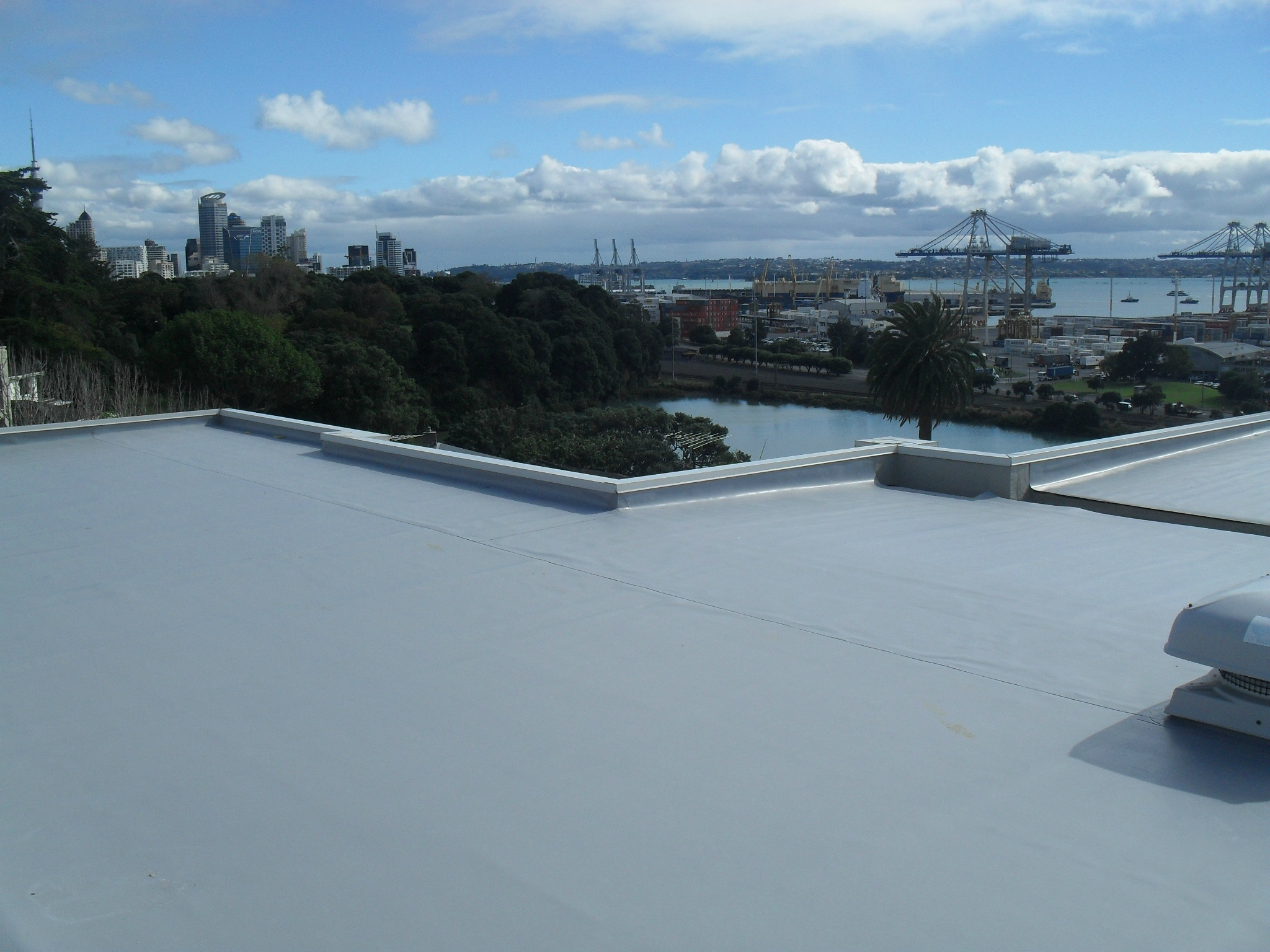
TPO and PVC single-ply roofing systems are the dominant specification for Fort Myers retail reroofing for the same reasons they dominate South Florida commercial construction broadly: heat-welded seam integrity that resists wind-driven rain infiltration, white reflective surfaces that combat the year-round solar gain of southwest Florida's tropical climate, and compatibility with the Florida Building Code's prescriptive attachment requirements for high-wind zones. For anchor stores at Colonial Square, Bell Tower Shops, and the Daniels Corridor retail developments, the combination of superior storm performance and measurable cooling cost reduction makes TPO and PVC the system specification that both landlords and their tenants' facilities teams consistently prefer.
Flat roof drainage design in Lee County takes on particular urgency given the rainfall volumes that tropical systems can deliver. Fort Myers averages 55 inches of annual rainfall, most of it concentrated in the wet season from June through September, and major storm events — whether Ian-scale named storms or the intense convective squalls that build over Florida's interior in summer — can deliver amounts that overwhelm drainage systems not sized for peak intensity. Strip centers along US- whose interior drain systems were installed in the 1980s and 1990s should be evaluated for drainage capacity adequacy during the pre-bid assessment phase of any roofing capital project, with tapered insulation or drain addition included in the scope where chronic ponding conditions exist.
HVAC penetrations on Fort Myers retail rooftops require hurricane-specific attention that goes beyond standard commercial practice in inland markets. Ian exposed the failure modes of improperly anchored rooftop equipment — units that weren't secured to code-required attachment standards became projectiles or tore roof membrane assemblies as they shifted during the storm. For any Fort Myers retail property undergoing a roof replacement, verifying that all rooftop HVAC equipment meets current FBC anchorage requirements — and adding mechanical anchors where documentation of code-compliant attachment cannot be confirmed — should be a standard scope item. The membrane tie-in at equipment curbs should also meet current hurricane zone flashing specifications, not the standard details that work in non-hurricane markets.
Tenant disruption management in Fort Myers retail carries the specific context of a market still absorbing post-Ian recovery activity. Some retail centers in Fort Myers and Cape Coral are operating in partially rebuilt configurations, with tenant spaces at different stages of restoration and a construction presence that has become normalized for both landlords and shoppers. For properties that avoided major Ian damage and maintained continuous operations, disruption management during a roofing project still requires careful communication with the tenant base — particularly the medical and professional service tenants who occupy a significant share of Lee County strip center retail — about work schedules, parking impacts, and the daily restoration of clean and accessible customer-facing conditions.
CAM budget planning for roofing in Fort Myers has evolved significantly in the post-Ian environment. Lee County retail landlords who previously treated roof capital as a long-horizon maintenance item have recalibrated toward more aggressive reserve strategies after experiencing storm losses and insurance market volatility firsthand. Building a CAM roof reserve that covers the full estimated replacement cost — depreciated on a straight-line basis from the installation date — rather than a partial contribution that relies on insurance proceeds to cover the gap is the approach that post-Ian experience has validated. Tenants in Fort Myers retail centers are increasingly willing to accept CAM roof reserve contributions as a rational operating cost given the demonstrated consequences of inadequate reserves in the 2022 storm season.
The Lee County retail market's recovery from Ian has also created opportunities to address roofing deficiencies that existed before the storm but weren't prioritized. Properties that underwent partial roof replacements as part of storm restoration work now have mixed-age roofing systems — some sections recently replaced to current code, others still carrying pre-Ian systems that may have been repaired rather than replaced after the storm. Managing those mixed-age systems requires a documented section-by-section condition assessment that assigns a capital timeline to each roof area independently, allowing the CAM budget to reflect the actual capital schedule rather than treating the entire building as having a uniform remaining life.
Selecting a commercial roofing contractor in Fort Myers after Ian means navigating a contractor market that has been stressed by the volume of post-storm demand. Some contractors who entered the Lee County market after Ian to meet restoration demand don't carry the manufacturer certifications, documented Florida commercial experience, or the project management infrastructure required for warranted retail roofing work. For Fort Myers retail landlords making capital roofing investments now — not emergency storm repairs — verifying manufacturer certification, local commercial retail project references, Florida Building Code compliance documentation, and adequate bonding and insurance before award is as important as evaluating the bid price itself.
- How did Hurricane Ian change commercial roofing requirements in Fort Myers?
- Ian's widespread roof failures on commercial properties that didn't meet current Florida Building Code wind attachment standards has prompted insurance carriers to tighten underwriting requirements and has accelerated the pace at which Lee County retail landlords are addressing pre-code roofing systems. Properties that cannot document FBC-compliant attachment are facing coverage restrictions, and the post-Ian insurance market has made that documentation gap financially consequential in ways it wasn't before the storm.
- What should Fort Myers retail landlords do if their roof was repaired but not replaced after Ian?
- A professional post-repair condition assessment that documents the current state of both the repaired and unrepaired sections, identifies any code compliance gaps, and provides a section-by-section capital timeline is the starting point for managing a mixed-age post-Ian roofing system responsibly. Insurance adjusters' repair approvals are not the same as a roofing professional's assessment of what's needed for long-term performance and code compliance.
- What drainage improvements are most important for Lee County strip centers?
- Verifying interior drain capacity against a 100-year design storm intensity event — not just annual average rainfall — and addressing chronic ponding conditions with tapered insulation or drain additions are the most impactful drainage improvements for older Fort Myers retail buildings. Post-Ian, ensuring that overflow scuppers are properly sized and unobstructed is particularly important because those secondary drainage systems are the last defense against catastrophic water accumulation if interior drains are overwhelmed during a major storm event.
- How should I evaluate a Fort Myers commercial roofing contractor post-Ian?
- Manufacturer certification specific to the proposed system, documented Florida commercial retail project references completed before and after Ian, Florida Building Code compliance documentation on completed projects, and adequate surety bonding and liability insurance are the four most important credentials to verify before awarding a commercial roofing contract in the post-Ian Lee County market. The volume of restoration demand has attracted contractors without those credentials, and distinguishing them from qualified installers requires direct verification rather than accepting representations at face value.
- What rooftop HVAC anchorage should Fort Myers retail buildings have?
- All rooftop HVAC equipment at Fort Myers retail buildings should be anchored to Florida Building Code requirements for the High-Velocity Hurricane Zone or equivalent wind zone designation for Lee County. Documentation of those anchorage specifications — equipment weight, pad and curb attachment details, and the code edition under which the installation was permitted — should be maintained in the building file as part of the overall roof and mechanical system documentation package.